Sunday, June 6, 2021

2021 stock market analysis | Chinese | 美股研究社 | 60 minutes study

June 6, 2021

My highlights:

  1.  华尔街高度控盘等待就业数据的公布 - when? 
  2. Facts: AMC连续套现20亿美元
  3. AMC的CEO身价也翻了30倍
  4. 拜登突然放了一个企业税的利好 - Google it!
  5. ADP就业数据 ?
  6. 非农就业数据 ?
  7. 苹果周一还要召开一年一度的WWDC - Watch some technical videos - 2021 WWDC
  8. Argument: 按照过去的经验来看,削减QE之后,其实美股都能继续涨一波,停止QE才是崩盘的开始。

最近两周相信大部分人都和我一样,对股指的波动感觉有点恶心。每天几乎完全没有任何波动,华尔街高度控盘等待就业数据的公布,多空都在等待方向的选择,市场像没头苍蝇一样,做多做空似乎都感觉风险很大。


在三大股指横盘的这两周时间里,WSB概念股再次群魔乱舞,什么AMC、BB、GME之类的小盘股再次成为市场最靓,但暴涨暴跌的行情,伴随着AMC连续套现20亿美元,基本宣告戛然而止。


有网友戏称,AMC的CEO是2021年最幸运的人。刚刚接手了一家快要倒闭的公司,正愁着如何规划企业的未来,突然一堆韭菜疯狂的拉高公司股价,顺利在高位套现20亿美元,自己身价也翻了30倍,公司未来一下清晰可见了,这可能就是2021年梦幻美股的缩影。


先来简单复盘下过去一周的走势吧,前三天高度横盘,标普这三天的波动是0.08%、-0.14%、0.05%,大盘就像一个停止心跳的病人一样,完全没有任何波动。除了极少数热闹的板块,绝大多数个股都是横盘震荡的阶段。


周四的时候,万众瞩目的就业数据终于出来了,ADP就业数据远超预期,在现在这个市场,经济数据利好会增加美联储削减购债规模的概率,所以利好就变成利空,三大股指纷纷跳水。


不过盘中拜登突然放了一个企业税的利好,股指又拉升了不少回来,但还是收跌。这个时候,市场其实已经有点恐慌了,因为周五要公布更为重要的非农就业数据,所有人都在担心非农就业数据会和ADP就业数据一样超出预期。


不过盘中拜登突然放了一个企业税的利好,股指又拉升了不少回来,但还是收跌。这个时候,市场其实已经有点恐慌了,因为周五要公布更为重要的非农就业数据,所有人都在担心非农就业数据会和ADP就业数据一样超出预期。


结果数据公布,令人大跌眼镜的再一次不及预期,华尔街又开心了,毕竟就业数据不好,这意味着美联储会继续货币宽松,三大股指高开高走,最终纳指也重新站稳了13800,多头似乎又一次重新恢复了对大盘的掌控,经历了连续横盘的两周,周五似乎终于选择了方向。


短期来看,三大股指突破站稳13800这个关键阻力位,自然还有进一步上涨空间,接下来几个交易日,做多也是相对比较安全的选择。苹果周一还要召开一年一度的WWDC,势必也会带着大盘再涨涨,但市场的方向真的已经选择出来了吗?


首先分析大盘接下来走势之前,我觉得有必要给大家分享两张图,这两张图可以说把大盘接下来的各种可能性走势都给出了预测,也可以说是未来三个月乃至半年大盘走势的一个预测,所以有必要引起我们的警惕。


第一张图,我们如果按照今年2月~3月的走势进行预测,周五纳指突破了上升旗形整理的阻力线,短线要迎来一波上升浪,如果非常乐观的情况下,接下来股指有潜力可以上涨至14500附近,最终受到上升趋势阻力线的压制,然后继续开始新一轮震荡向上的过程。


第二张图,纳指短线确实能反弹一波,但反弹到高位之后,最终没能成功突破之前的历史新高,结果就变成了一个头肩顶。这个头肩顶是过去半年形成的超级头部,这种超级头部一旦形成,那么可能会对接下来很长一段时间内的股指上涨造成巨大的压力,美股可能会继续大幅震荡。


哪种可能性更大?每个人相信都会有不同的理解,但大家都应该认可一件事,今年的美股投资环境相当复杂。去年的投资主线是「疫情带来的居家办公」,我们只需要买入疫情利好的科技股,那基本就可以轻松跑赢大盘,但今年的投资主线是「加息和通胀」,整体是不利于成长股的,波动自然就会相当大。


群里面有个小伙伴说得非常好,大盘即使有往上空间,这个空间也不会太大,但一旦市场选择往下,这个空间却非常大,所以我们需要保持足够的谨慎。因为一旦往下跌,那损失大部分人都受不了,必然是类似今年2月那样,跌得又快又猛。现在这行情,宁愿少赚点,也要保证本金的安全。


今年的行情其实大体上就是这样,2月~3月的时候,三大股指其实没怎么跌,即使最弱的纳指也就是从高位回调了8%,但我们看到很多成长股基本都腰斩了,有的股甚至从高位回撤了超过80%,我周末特意统计了今年IPO的公司,发现可以给投资者带来正向回报的公司,那简直是凤毛菱角。


下周的6月10日为何是大盘接下来三个月乃至半年的关键节点,原因就在于周四公布的那份CPI数据。在公布4月CPI数据之后,高到吓人的通胀一度让市场恐慌,但很快就被美联储安抚了下来「通胀是暂时的,如果我们对通胀的描述是错的,我们也有足够的工具去解决通胀」。通胀是不是暂时的,肯定没办法通过一个月的数据去看,市场必须要多看几个月的数据,通胀是不是连续上升,这才能去进行精准判断,所以5月的CPI数据就相当关键。


大家要记住一件事,6月15日的美联储议息会议,这才是真正能影响大盘的,而一切和美联储货币政策相关的消息,那都会引起整体美股估值逻辑的变化。这一次的议息会议,必然会根据5月的通胀数据进行调整。6月15日的美联储议息会议为什么重要?因为再一次美联储议息会议那要到9月份了,也就是说,未来三个月没有美联储的重大会议,那么市场接下来的走势,那基本就会根据这次的会议结果去决定。


纵观美联储紧货币操作的规律。经济过热往往是美联储收紧货币的触发条件,美联储政策又取决于两方面因素:就业和通胀。美联储承诺将维持零利率政策和其他购债等宽松措施,直到其认为就业市场强劲且通胀加剧为止。现在5月非农数据仍不及预期,市场的关注点自然就放在了通胀上,所以你知道下周通胀数据的重要性了吧。


站在当下,收紧货币政策的时机已经逐渐成熟。首先,疫情对美国经济的约束或于7月就彻底解除,届时美国将正式步入经济过热阶段:经济更为均衡、资本开支全面加速。这意味着美联储收紧货币政策经济条件已经满足。再者, 7月后美国不会再提供额外的抗疫刺激,财政政策对于美联储货币政策的刚性约束也将在7月解除。因此,美联储很有可能在6月的这一次议息会议上释放相关信息。


在美股研究社看来,尽管美联储认为通胀是暂时的,但是他们现在也开始怀疑,劳动力供给方面的缓慢反应是否可能导致连续数个季度的高通胀数据,并开始影响消费者心理。从近期美联储官员的公开谈话中可以清楚地看到他们对于缩减 QE 态度的转变。上周美联储负责金融监管的副主席夸尔斯 ( Randal Quarles ) ,以及美联储二把手、联储副主席克拉里达均在公开场合表态,称政策制定者可能会在即将召开的会议上开始讨论减少 QE 购债。


4月及5月两份不及预期的非农就业报告,现在是被市场解读成了美联储会继续放水,并让三大股指迎来反弹,但在经济创纪录的职位空缺背景下,为什么人们不重返工作岗位? 这背后怕是和美国慷慨的失业救济金政策脱不开关系,所以美联储在6月的议息会议上释放将逐步缩减量化宽松,这并非没有可能。


这里穿插一个Twitter大神的观点,大神的观点其实和我差不多,并不认为今年美联储削减购债规模,美股就会进入熊市。按照过去的经验来看,削减QE之后,其实美股都能继续涨一波,停止QE才是崩盘的开始。但我认为,股指虽然会涨,估计应该更多是价值股、FAAMG、芯片这些没什么泡沫的板块在涨,至于ARKK的梦幻股会在未来某个日子继续暴跌,而这并不会影响股指继续往上,毕竟巨头的权重更高,市场板块将发生相当明显的分化。


下周还有一件可能的黑天鹅,也是必须要关注的,那就是乘联会将公布中国新能源电动车在5月的销量,这其中自然就涉及了备受市场争议的特斯拉。特斯拉即是成长股的龙头,也是ARKK的第一权重,还能影响包括比特币、WSB等大多数风险资产的波动,所以特斯拉暴涨暴跌的时候,股指的波动也会相当大。


周四的时候,外媒突然一篇报道,特斯拉5月份的中国销量,因为持续发酵的负面事件,已经直接腰斩至9800辆,特斯拉的股价当日也放量暴跌5.33%。周五的时候,突然又有知情人士辟谣,特斯拉5月的中国销量实际并未下滑太多,现在仍有21800辆,特斯拉也因此应声暴涨4.58%。


现在特斯拉5月的销量到底是多少,所有人都不知道。一个说是9800辆,一个说是21800辆。如果是前者,特斯拉的高增长逻辑彻底破灭,那特斯拉必然会跌破560的支撑,并且大概率去试探430美元~450美元的支撑区间。如果是后者,那特斯拉也会打爆空头,至少会反弹至630美元。谜题的答案,即将在6月10日被揭晓,官方的数据至少是可信的。


大家应该发现了一件事,那就是周一到周三会相对平静,这几天也没什么重要数据公布,大盘也应该比较安全。周四要公布CPI数据和特斯拉的中国销量,大盘又是存在巨大的不确定性,周三收盘可能又是一个重要的减仓时间节点。剩下的时间轻仓前行,耐心等待多空博弈,坐下来看戏才是最好的选择。


最后送大家一句话,从历史数据统计来看,6月是仅次于9月,一年中表现第二差的月份,希望不要因为未来几天大盘涨了,你就彻底失去了冷静。

AWS Fundamentals | https://www.simplilearn.com/ | My learning 60 minutes

June 6, 2021

Here is the link. 

I have to slow down on everything, and take some time to learn Amazon AWS. Cloud solution is the future, if I do not invest time on cloud solution early, then I will miss a lot of learning opportunities down the road. 

My notes:

  1. In this section of the AWS fundamentals tutorial, we will be using the services Route 53, CloudWatch, EC2 and S3, and Elastic Load Balancer to deploy a web application that will store data about customers subscribing to a particular website
  2. User case:
    1. Service Route 53 - DNS service etc. 
    2. CloudWatch - 
    3. EC2 - application server or web server
    4. S3 - storage 
    5. Elastic load balancer 

Serving 190 countries with scalable, reliable, low-cost infrastructure, Amazon Web Services (AWS) powers thousands of businesses across the world. Not only that, AWS takes nearly half of the worldwide public cloud share. This AWS fundamentals tutorial article will help you learn everything you need to about AWS and its services.

To put things into perspective, let’s use the Spotify application, for instance: so what would Spotify be without a cloud service provider like AWS. What if Spotify ran out of songs to play? This is one of the four major problems that Spotify would face.

Other problems would be:

  • Providing users access to songs from anywhere in the world
  • Cataloging the songs that were released and would soon be released
  • Managing more than 20,000 songs added every day

The solution to all these problems came in the form of Amazon Web Services! AWS offers large storage capacity, proper utilization of resources, and easy scalability.

Before we begin with AWS fundamentals tutorial, let’s have a look at what we’ll be covering in this article:

  1. What is AWS?
  2. How did AWS become so successful?
  3. The services AWS provides
  4. The future of AWS
  5. Use Case - Deploying an AWS application

What Is AWS?

Before we get deeper into understanding and learning about AWS fundamental and more, let us go through what exactly AWS is? Amazon Web Services (AWS) is a highly available, secure cloud services platform that offers more than 100 cloud applications. Providing a pay-as-you-go system removes the requirement for capital to be provided upfront. It helps in controlling, auditing, and managing identity, configuration, and usage.

Several companies around the world use AWS’s services, such as Docker, Kellog’s, NASA, McDonald’s, BMW, Harvard Medical School, and Adobe, to name a few.

Now that you know how much of a broad appeal AWS has around the world, let’s find out what makes AWS so unique.

How Has AWS Become So Successful?

  1. Security: AWS provides a secure and durable platform that provides end-to-end security and storage.
  2. Experience: The skills and infrastructure management born from Amazon’s many years of experience can be very valuable.
  3. Flexibility: It allows users to select the operating systems, language, database, and other services as per their requirements.
  4. Easy to use: AWS lets you host your applications quickly and securely, regardless of whether it’s an existing or new application.
  5. Scalable: The applications you use can be scaled up or down, depending on your requirements.
  6. Cost savings: You only pay for the compute power, storage, and other resources that you use, without any long-term commitments.
  7. Scheduling: This enables you to start and stop AWS services at predetermined times
  8. Reliability: AWS takes multiple backups at servers at multiple physical locations

AWS’s success comes from the services it provides, so let’s have a look at some of them.

What Services Does AWS Provide?

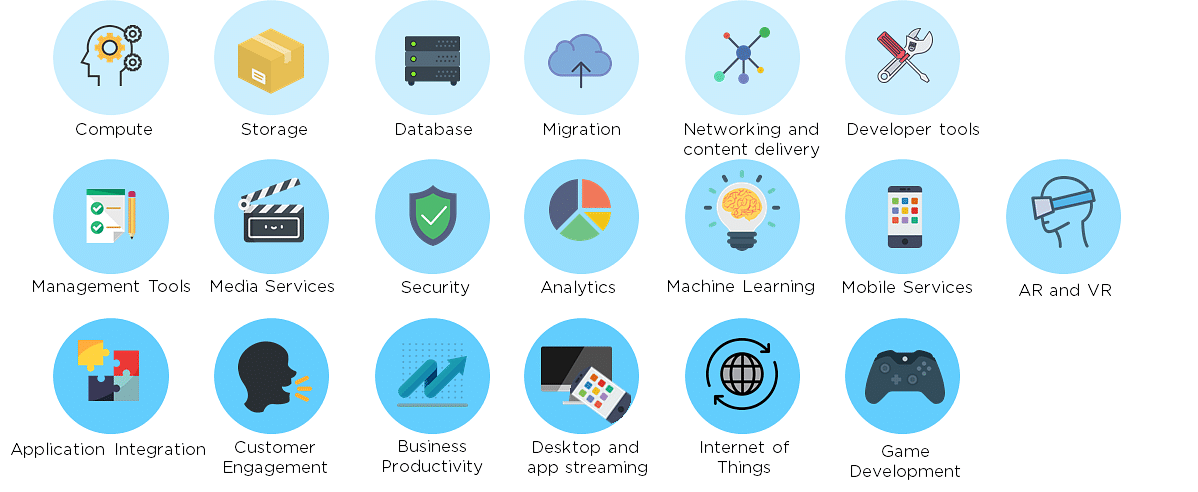
AWS services are divided into these domains:

AWS-services

We’re going to have a look at each of these domains and the services within them in this AWS fundamentals tutorial. First, let’s have a look at AWS Compute services. 

1. Amazon EC2

EC2 provides compute capacity in the cloud. This capacity is secure and resizable based on the user’s requirements. EC2 can expand or shrink the resources provided, depending on the load the organization is facing. 

Amazon EC2

2. Amazon Elastic Beanstalk

Helps to scale and deploy web applications made with several programming languages like java, python, ruby, and .NET. EBS handles the deployment of the code as soon as it is uploaded.

Amazon Elastic Beanstalk

3. Amazon Lightsail

Enables a virtual private server (VPS) to be launched and managed with ease. It includes everything required by developers who want to start their projects quickly on a virtual machine.

Amazon Lightsail

4. Amazon Lambda

It allows you to pay only for compute time. No need for provisioning and managing servers. Lambda executes code only when required, and scales automatically. It can handle a few requests a day, all the way to thousands a second. 


Amazon Lambda

Next up in the AWS fundamentals tutorial, let’s have a look at AWS Storage services:

1. Amazon S3:

S3 is an object storage that can store and retrieve data from anywhere: websites, mobile apps, IoT sensors, and so on. It is durable, provides comprehensive security, and flexibility in managing data.

Amazon s3

2. Amazon Glacier

Amazon Glacier is a cloud storage service that is used for archiving data and long-term backup. The glacier is used for data archiving and long term backup. 

Amazon Glacier

3. Amazon EBS

Amazon Elastic Block Store provides block storage volumes for instances of Amazon EC2. EBS is a reliable storage volume that can be attached to any running instance that is in the same availability zone. 

Amazon EBS

Serving 190 countries with scalable, reliable, low-cost infrastructure, Amazon Web Services (AWS) powers thousands of businesses across the world. Not only that, AWS takes nearly half of the worldwide public cloud share. This AWS fundamentals tutorial article will help you learn everything you need to about AWS and its services.

To put things into perspective, let’s use the Spotify application, for instance: so what would Spotify be without a cloud service provider like AWS. What if Spotify ran out of songs to play? This is one of the four major problems that Spotify would face.

Other problems would be:

  • Providing users access to songs from anywhere in the world
  • Cataloging the songs that were released and would soon be released
  • Managing more than 20,000 songs added every day

The solution to all these problems came in the form of Amazon Web Services! AWS offers large storage capacity, proper utilization of resources, and easy scalability.

Enroll in our AWS Solutions Architect Certification Course today and develop a strong foundation in Cloud Computing.

Before we begin with AWS fundamentals tutorial, let’s have a look at what we’ll be covering in this article:

  1. What is AWS?
  2. How did AWS become so successful?
  3. The services AWS provides
  4. The future of AWS
  5. Use Case - Deploying an AWS application

What Is AWS?

Before we get deeper into understanding and learning about AWS fundamental and more, let us go through what exactly AWS is? Amazon Web Services (AWS) is a highly available, secure cloud services platform that offers more than 100 cloud applications. Providing a pay-as-you-go system removes the requirement for capital to be provided upfront. It helps in controlling, auditing, and managing identity, configuration, and usage.

Several companies around the world use AWS’s services, such as Docker, Kellog’s, NASA, McDonald’s, BMW, Harvard Medical School, and Adobe, to name a few.

Now that you know how much of a broad appeal AWS has around the world, let’s find out what makes AWS so unique.

How Has AWS Become So Successful?

  1. Security: AWS provides a secure and durable platform that provides end-to-end security and storage.
  2. Experience: The skills and infrastructure management born from Amazon’s many years of experience can be very valuable.
  3. Flexibility: It allows users to select the operating systems, language, database, and other services as per their requirements.
  4. Easy to use: AWS lets you host your applications quickly and securely, regardless of whether it’s an existing or new application.
  5. Scalable: The applications you use can be scaled up or down, depending on your requirements.
  6. Cost savings: You only pay for the compute power, storage, and other resources that you use, without any long-term commitments.
  7. Scheduling: This enables you to start and stop AWS services at predetermined times
  8. Reliability: AWS takes multiple backups at servers at multiple physical locations

AWS’s success comes from the services it provides, so let’s have a look at some of them.

Gain an extensive understanding of cloud computing and become an expert in Azure, AWS, and GCP with our Cloud Computing Certification training now!

What Services Does AWS Provide?

AWS services are divided into these domains:
AWS-services

We’re going to have a look at each of these domains and the services within them in this AWS fundamentals tutorial. First, let’s have a look at AWS Compute services. 

1. Amazon EC2

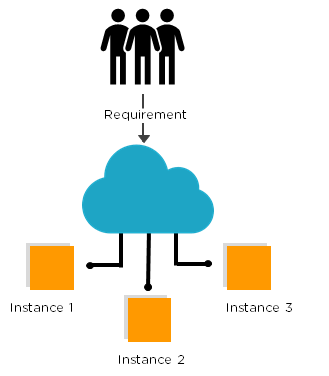
EC2 provides compute capacity in the cloud. This capacity is secure and resizable based on the user’s requirements. EC2 can expand or shrink the resources provided, depending on the load the organization is facing. 
Amazon EC2

2. Amazon Elastic Beanstalk

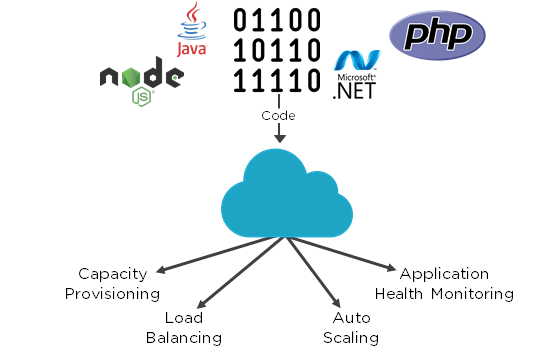
Helps to scale and deploy web applications made with several programming languages like java, python, ruby, and .NET. EBS handles the deployment of the code as soon as it is uploaded.
Amazon Elastic Beanstalk

3. Amazon Lightsail

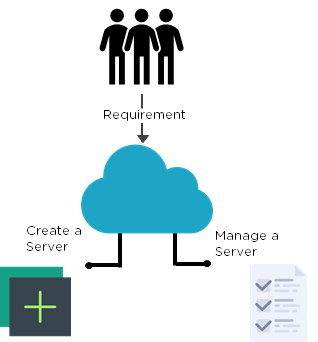
Enables a virtual private server (VPS) to be launched and managed with ease. It includes everything required by developers who want to start their projects quickly on a virtual machine.
Amazon Lightsail

4. Amazon Lambda

It allows you to pay only for compute time. No need for provisioning and managing servers. Lambda executes code only when required, and scales automatically. It can handle a few requests a day, all the way to thousands a second. 
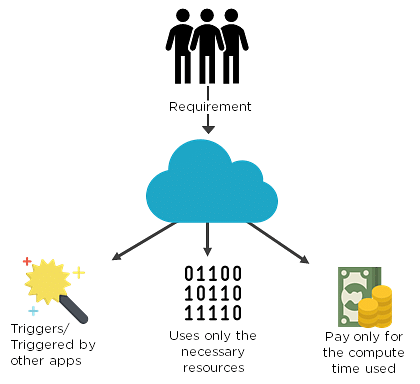
 

Amazon Lambda

Next up in the AWS fundamentals tutorial, let’s have a look at AWS Storage services:

1. Amazon S3:

S3 is an object storage that can store and retrieve data from anywhere: websites, mobile apps, IoT sensors, and so on. It is durable, provides comprehensive security, and flexibility in managing data.
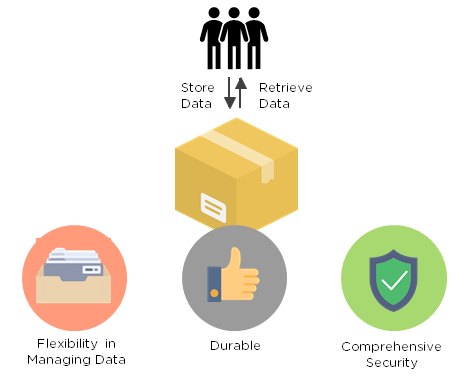
Amazon s3

2. Amazon Glacier

Amazon Glacier is a cloud storage service that is used for archiving data and long-term backup. The glacier is used for data archiving and long term backup. 

Amazon Glacier

3. Amazon EBS

Amazon Elastic Block Store provides block storage volumes for instances of Amazon EC2. EBS is a reliable storage volume that can be attached to any running instance that is in the same availability zone. 
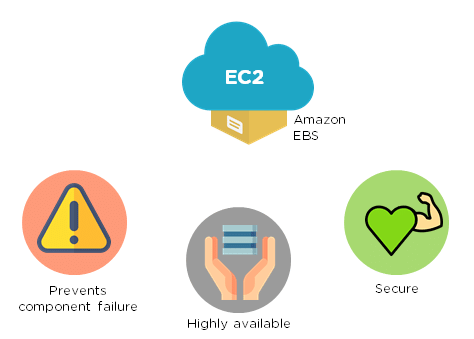
Amazon EBS

4. Amazon Elastic File System

Amazon EFS provides elastic file storage, which can be used with AWS Cloud Services and resources that are on-premises. It is easy to use and offers a simple interface that allows you to create and configure file systems quickly and easily.
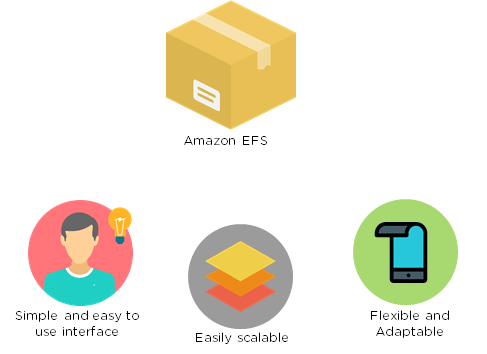
Amazon Elastic File System

Next up in the AWS fundamentals tutorial let’s have a look at the AWS Database services:

1. Amazon RDS

Amazon RDS eases the process involved in setting up, operating, and scaling a relational database in the cloud. It helps with tasks like hardware provisioning, database setup, backup, and so on. It frees us from managing the hardware and enables us to focus on the application.
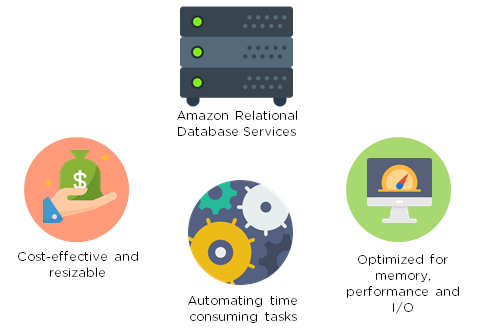
rds

2. Amazon Redshift

Amazon Redshift is a data warehouse that enables users to analyze their data using SQL and other BI tools. It is a fast, fully managed data warehouse. It also allows users to run complex analytical queries against structured data using sophisticated query optimizations.
redshift

Wondering about other services? This AWS fundamentals tutorial has got you covered!

1. AWS Application Discovery Service

AWS ADS helps enterprise customers perform the process of migration by collecting information about their on-premises data centers. 

Domain: Migration

2. Amazon Route 53

Route 53 is a scalable DNS web service to route end users to Internet applications. 

Domain: Networking and content delivery

3. Elastic Load Balancing

Elastic Load Balancing automatically diverts incoming traffic into multiple targets.

Domain: Networking and content delivery

4. AWS Autoscaling

AWS Auto Scaling automatically adjusts resource usage to ensure steady performance at the lowest cost. 

Domain: Management tools

5. AWS Identity and Access Management

AWS IAM helps users manage AWS resources securely, allowing users and groups to be allowed or denied permission. 

Domain: Security

What Can We Expect of AWS in the Future? 

  • A greater variety of cloud applications
  • Expansion into other marketing units
  • Greater innovation in AI 
  • Greater adoption by organizations

Now that you know how AWS is set to grow in the future let’s have a look at a practical example to deploy a web application in this AWS fundamentals tutorial.

Use Case - Deploying an AWS application

In this section of the AWS fundamentals tutorial, we will be using the services Route 53, CloudWatch, EC2 and S3, and Elastic Load Balancer to deploy a web application that will store data about customers subscribing to a particular website. 

EC2: EC2 is used for provisioning the computational power required for the application.

S3: Provides additional storage.

CloudWatch: Helps monitor the web application. Here, we use it to see if we need to scale in or out.

Route 53: Helps to register a domain name for your web application.

ELB: It will create a monitoring environment while handling security and load balancing requirements of the application.

Simplilearn is one of the world’s leading providers of online training for Digital Marketing, Cloud Computing, Project Management, Data Science, IT, Software Development, and many other emerging technologies.

Saturday, June 5, 2021

NVO stock: Health care: Novo Nordisk CEO discusses 7% sales growth in 2020 and overall industry

June 5, 2021

Here is the link. 


Lindasay说: 关于我,和我的经历 Facts About Me | 谢谢大家给我的100K!2020杀青

 June 5, 2021

Here is the link. 

终于录了这期100K视频,平时都很大家聊知识,今天终于有机会和大家分享我的成长经历和Q&A :) 谢谢小伙伴们热情的提问,2021我们来啦~ 祝大家新年快乐!! 关于我: 我的成长经历 为什么离开JPMorgan开始创业 关于“Lindsay说”和up主经历 关于时间管理 关于保持乐观的心态 感情状况~ 上班经常穿的衣服品牌分享:Vince, Theory, Rag & Bone, Equipment, Elie Tahari, Frame,A.L.C, The Kooples;平价一点 - Banana Republic, Ann Taylor, J Crew (这几个经常打折优惠的时候力度很大), Zara和H&M也能找到很不错的款式;Designer - Stella McCartney, Saint Laurent, Jason Wu 视频里经常出镜的品牌:Ulla Johnson, Equipment, Sandro, Alexis, Zara, Veronica Beard. ❤️Follow Me 知乎/小红书/B站 - Lindsay说 LinkedIn - Lindsay Zou 微信:lindsay2688 我的创业公司:Offer帮 求职在线学习平台 offerbang.io 希望能帮到找工作的小伙伴~


Friday, June 4, 2021

Leading Scientist Reveals The Secrets to a Healthy Immune System with Jenna Macciochi

June 4, 2021

Here is the link.  

What does immunity mean to you? In today’s Feel Better Live More podcast, researcher and lecturer, Dr Jenna Macciochi explains that it’s not just about fighting off infection. Our immune systems do not lie dormant, waiting to wage war if bacteria or viruses invade – they play a central and constant role as our bodies’ housekeepers.

How do we do that? From empowering nutrition advice to insights into how our metabolism and immune systems interact, there’s plenty of practical takeaway from this conversation. We discuss the disruptive effects of stress and how cortisol dampens immunity and even reactivates viruses. Having learned this first-hand when chronic stress led to her getting pneumonia, Jenna shares some helpful rituals for reducing the impact of stress in your life. Perhaps most fascinating though, is the idea that the type of person you are can shape your immunity. Jenna explains there are five main personality categories and each of them have specific immunological features. Traits and behaviours typical of each category, such as risk taking, sociability and how we respond to stress, can end up informing how our immune systems develop. As we discuss, ‘It’s more important to know what person the disease has than what disease the person has.’ This is a valuable conversation for anyone who wants to understand more about their immune system, not just to reduce their risk of getting an infection, but also to increase their overall wellbeing and longevity. Show notes available at https://drchatterjee.com/125 Connect with Jenna: Website https://www.drjennamacciochi.com Instagram https://www.instagram.com/dr_jenna_ma... Twitter https://twitter.com/DrJMacc Jenna’s book: Immunity: The Science of Staying Well - https://amzn.to/2S6kd8H Related Feel Better Live More podcasts: #33 The Gut-Brain Connection and Why Diversity is Key with Miguel Toribio-Mateas https://youtu.be/88GsMk8-tTM #81 Why When We Eat May Be More Important Than What We Eat with Professor Satchin Panda https://youtu.be/EK7VH6T_2-o

Hugo Barra | Facebook 2021 F8


Hugo Barra

VP of VR | Facebook


MIT

Hugo Barra is a name that you probably want to know if you’re in the tech world. He’s been named one of the Wired 100, Business Insider’s Silicon Valley 100, and Época magazine’s most influential Brazilians.

After growing up in Belo Horizonte, Brazil, Barra began his college studies in Brazil at Universidade Federal de Minas Gerais but then transferred to MIT, where he earned a bachelor’s and a master’s degree in electrical engineering and computer science, as well as a bachelor’s degree in management science.

In 2008, Barra joined Google in its London offices. During his nearly five-year tenure with Google, Barra contributed to the development of the Android operating system—expanding it to thousands of partners and more than one billion people around the world.

In 2013, Barra left Google for the executive team at Xiaomi in Beijing, where he led the company’s global expansion strategy to markets beyond mainland China, such as India, Southeast Asia, and Brazil. In January 2017, Barra announced that he would be leaving Xiaomi to return to Silicon Valley, where his friends and family were.

Upon leaving Xiaomi, he joined Facebook as the vice president of virtual reality, leading the Oculus team. With teams devoted to research, computer vision, optics, social interaction, and more, Oculus is committed to driving the state-of-the-art technology forward through relentless innovation.


Social Media Socialite

Hugo Barra is pretty active on social media, with nearly 135,000 Facebook followers and more than 115,000 Twitter followers. On his social media accounts, he posts everything from articles about VR to promotional videos of projects he’s working on to photos of outings with friends and family.

To see his social media, find his Facebook page here and his Twitter here.