Monday, July 21, 2025
交易员导师布雷特·斯坦伯格:成功的期货股票交易员最喜欢的三种止损策略

10 Best Books on Trading Psychology
In the world of online trading, success does not just depend on market knowledge or technical analysis, but significantly on the trader's psychological resilience and mindset.
The following article explores a curated list of influential books that delve into the mental and emotional aspects of trading. These works, authored by esteemed experts in psychology and trading, offer invaluable insights into managing emotions, developing discipline, and understanding the psychological factors that influence trading decisions.
Whether you're a seasoned trader or just starting out, these books provide essential strategies for cultivating a mindset that can weather the volatility of the markets and enhance decision-making skills, ultimately leading to sustained success in your trading endeavors.
#1 Best Loser Wins – Tom Hougaard
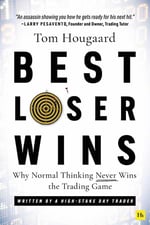 'Best Loser Wins' by Tom Hougaard presents a counterintuitive yet profound approach to trading, emphasizing the skill of managing losses effectively. Most traders exclusively focus on winning, but this book shifts the paradigm to understanding and embracing losses as a path to success. Readers will learn the psychological resilience required to deal with losses, strategies to minimize them, and the importance of a clear mindset in trading. Hougaard's insights help traders develop a healthier relationship with losses, improving their decision-making process and overall trading performance.
#2 Market Mind Games – Denise Shull
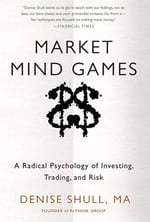 Denise Shull's 'Market Mind Games' delves into the psychological complexities of trading. It offers a neuropsychological perspective, helping traders understand the emotional and cognitive processes influencing their trading decisions. Readers gain insights into managing emotions, understanding market psychology, and making more informed decisions under pressure. This book is essential for traders looking to align their psychological state with their trading strategy, leading to more consistent and rational decision-making.
#3 The Daily Trading Coach - Dr. Brett Steenbarger
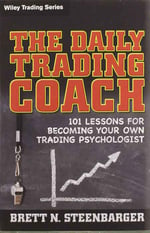 In 'The Daily Trading Coach', Dr. Brett Steenbarger provides traders with practical strategies for self-improvement. The book is structured as a series of lessons that guide traders in refining their approaches daily. It covers topics such as coping with stress, developing self-discipline, and learning from mistakes. Traders will learn to become their own coaches, enabling continuous personal and professional development essential for sustained success in the market.
#4 The Psychology of Money – Morgan Housel
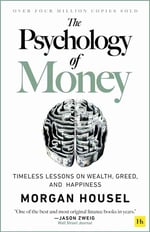 Morgan Housel's 'The Psychology of Money' offers insightful narratives about how people think about money and the peculiar ways they behave with it. Traders will benefit from understanding the psychological factors driving decisions when money is on the line. The book covers a broad range of topics, from risk management to the influence of ego in financial decisions, making it a vital read for anyone looking to develop a more thoughtful and disciplined approach to trading.
#5 Radical Renewal – Dr. Brett Steenbarger
'Radical Renewal' by Dr. Brett Steenbarger addresses the psychological challenges traders face and provides tools for profound personal transformation. The book combines insights from psychology with practical trading applications. Traders will learn about the importance of mental health, adaptability, and the development of a growth mindset in achieving long-term success in trading.
The great thing about this book is that Dr. Steenbarger published this book as a series of freely accessible blog posts: Read Radical Renewal
#6 Trading in the Zone - Mark Douglas
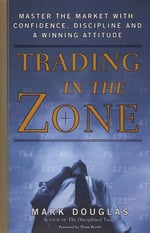 Mark Douglas' 'Trading in the Zone' is a seminal work that addresses the mental state required to achieve consistent trading success. It teaches traders to think in probabilities, manage risks, and understand the psychological pitfalls that can impede decision-making. This book is crucial for traders aiming to develop a mindset that is free from emotional interference, enhancing their ability to make decisions based on market realities rather than personal biases.
#7 Trading for a Living – Dr. Alexander Elder
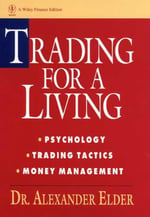 'Trading for a Living' by Dr. Alexander Elder covers the essential aspects of trading psychology, risk management, and technical analysis. It offers a comprehensive guide for traders to develop disciplined trading habits, understand market dynamics, and manage their emotions. This book is particularly valuable for traders seeking to establish a solid foundation in their trading career, combining psychological strategies with practical trading techniques.
#8 The Disciplined Trader – Mark Douglas
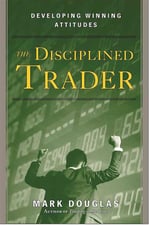 In 'The Disciplined Trader', Mark Douglas explores the psychological challenges traders face and offers strategies to overcome them. The book emphasizes the importance of discipline, mental clarity, and emotional control in successful trading. It guides traders in developing a structured approach to the market, helping them avoid common psychological traps and make more rational trading decisions.
#9 Atomic Habits – James Clear
 James Clear's 'Atomic Habits' is not specifically about trading but offers invaluable insights into habit formation and improvement. Traders can apply these principles to develop consistent and effective trading routines, enhance discipline, and cultivate positive trading habits. This book is essential for traders looking to make incremental improvements that compound over time, leading to significant growth in their trading skills and strategies.
#10 The Mental Game of Trading – Jared Tendler
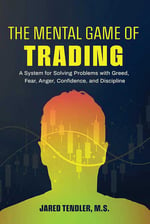 Jared Tendler's 'The Mental Game of Trading' provides a comprehensive guide to mastering the psychological aspects of trading. It addresses common mental pitfalls traders encounter, such as fear, greed, and overconfidence. Readers will learn practical techniques for enhancing mental toughness, improving focus, and maintaining emotional equilibrium under pressure. This book is crucial for traders aiming to build a robust psychological framework, essential for navigating the volatile world of trading.
How to think like a hedge fund manager
How to think like a hedge fund manager
Prior to managing individual people’s money, I worked as a risk manager at the world’s largest publicly traded hedge fund. We ran a multi-manager pooled investment vehicle that invests into hedge funds as its core strategy. Asset allocation on steroids, with strategies ranging from long-short equity, to global macro, to arbitrage strategies on mergers, convertible bonds, and volatility. My role as a risk manager was to interview some of the most brilliant minds and powerful people in the investment world. Some hedge fund managers were quiet math nerds, while others were as boisterous as the characters on Billions. Regardless of who was in the seat across from me, my job was to understand what they did, and write a report that contained my opinion of whether this hedge fund was suitable for investment. In risk management, my job was two fold: to protect our clients from frauds, and to protect our client’s capital from unforeseen losses. While today I believe that successful investing doesn’t necessarily need to be as complicated as a hedge fund, the core lessons I learned in my former role do shape the way I think about investing today. I’d like to share those with you in this blog, and a few hedge fund stories along the way.
Lesson number 1: Know your counterparty. Understand where your money is being held.
This one sounds so obvious, and yet time and time again I see a lack of due diligence in this area. Hedge funds often engage with a multitude of financial counterparties to invest, obtain leverage, or lend for a return. It’s reasonable to work with a number of counterparties to get the best offerings available (think, shopping interest rates), but when proper due diligence isn’t performed, it can be painful. Understanding investment risk is one thing, but cash should be safe. What could go wrong? Lehman Brothers. In this classic example, we saw that many hedge funds who had cash held at Lehman during 2008 were still cleaning up the mess 10 years later, having lost a great deal of capital on what was supposed to be their safest investment, cash.
When cash is held in a bank account, up to $250k should be covered by FDIC insurance, which means that the US Government will provide protection over your cash in the case that the bank goes bankrupt. In an investment account, if your account is held with a SIPC member firm, you have similar protections through SIPC. These institutions are reliable, and further due diligence isn’t necessarily required if you have under $250k for cash or investments you manage. However, when your balance exceeds that amount, or when you hand over the reins to a third party, knowing where your cash is held is important.
Where could this matter for you?
If you have over $250k in an account, check the credit worthiness of the bank. If you don’t know how to do that, and you need to keep more than $250k in cash, it’s OK to spread your cash across multiple institutions to gain FDIC protection.
Working with a financial advisor. Your financial advisor should be granted limited power of attorney over your investments, which will allow them to invest on your behalf and charge a management fee. However, your financial advisor should be custodying your assets with a qualified custodian. This setup provides you, the investment account owner, with control of how cash is moved in and out of your account. Schwab, TD Ameritrade, Fidelity, and Pershing are all examples of qualified custodians.
Investing in cryptocurrency is complicated in general, but how cryptocurrency is safely held is an ongoing debate. We’ll point to one of our favorite financial planning gurus, Derek Tharp, Lead Researcher at Kitces.com, for his take on this. As you can see from this article, it’s not so straightforward! And frankly, is why I have yet to invest.
Investing in private companies. You should understand where your cash is being stored, what it can be used for, who has the authority to use it, and if it can be pledged for debt.
Lesson number 2: Don’t put all your eggs in one basket.
This one was relevant in 2000, it was relevant in 2010, and it’s relevant today. Concentration blows you up. Tiger Global Management is notorious in the hedge fund world. Obtaining training from Tiger is a badge of honor, it’s like going to an Ivy League college for stock picking portfolio management, so much so that anyone who comes out of there is referred to as a Tiger Cub. They are notorious, because they take big swings, and sometimes they hit it out of the park. But when it goes wrong, it goes really wrong. Here is the most recent instance, where the FT reports that Tiger blames inflation after a 50% drop in flagship hedge fund. But this isn't the first time! Back in 2000, the Washington Post reported that Tiger Funds was closing, blaming the irrational market.
We used to watch 13F filings* to evaluate our exposure to Tiger (the original & the cubs) concentrated holdings. (*Anyone investing over $100 million has to report to the SEC via a 13F filing what stocks they own, and this is publicly reported). Because so many of these portfolio managers came from the same training grounds, we would see a lot of added risk once they piled into certain positions. They did well as they were piling in, but as they started to unwind, there would be huge downward pressure, and we didn’t want that exposure or risk!
This is highly relevant for our client base, many of whom have concentrated stock positions. It’s great when it’s going well and you’re getting richer in two ways: stock is going up, and you’re probably getting a raise! However, the downside is painful. We’d prefer that none of our clients invest in their own company stock, but if they do, we always recommend setting a cap on how much exposure to have in that stock versus their investable assets / net worth, and sticking to it! More often than not, you don’t need to take huge concentrated risks to set yourself up for life.
Lesson number 3: You don’t have to be right 100% of the time, you just have to be right more than you’re wrong, and win more when you’re right than you lose when you’re wrong. The combination of those two forces can make you very rich.
There’s a hedge fund strategy called statistical arbitrage that exemplifies this concept. The primary execution of the strategy is to go long stocks with leverage, and short stocks with leverage in the same amount, while eliminating all possible market risk. This meant that on $1 million of investments, they could go long on $5 million of stocks (betting that the price of these stocks would go up and $5 million short of stocks (betting that the price of these stocks would go down). However, it would be very nuanced, where there would be equally long and short country exposure, sector exposure, industry exposure, factor exposure, and the list goes on and on and on. These funds are often run by a combination of computer scientists and PhDs who are responsible for analyzing and extrapolating big data into trends. To juxtapose the variety of how analysis was done:
Fund 1 used software to translate and analyze small local newspapers across Asia to evaluate how companies were spoken about, to determine if they should bet on or against a company.
Fund 2 used beacons to track customers shopping at Target, and then essentially used this beacon to monitor individuals’ online behavior and determine whether they were more of a Craigslist or Restoration Hardware shopper. Based on this categorization, the model would then decide if they should be for or against a given stock. Hearing this for the first time blew…my…mind.
These funds took big bets from an overall exposure perspective, but actually on an individual risk perspective, each bet was very small (we’re talking less than 0.3% of a portfolio). Their main goal was to win more times than they lost, and win more when they won, than lose when they lost. By doing so, they locked in extremely high returns. The best of this sort is Renaissance Technologies, who from 1988 to 2020 is reported to have earned 66% returns per year on average.
Simplifying this to what you can do: be a long term investor in the stock market. Jeremy Schwartz and Jeremy Siegel of WisdomTree share research in the book Stocks from the Long Run about how the S&P 500 performed over various time horizons. Some stats:
If your holding period is over 10 years, since 1802, stocks have outperformed T-Bills 75% of the time. Even on a 1 year basis, stocks outperformed T-Bills 63.2% of the time.
Similarly, reviewing all 10 year periods since 1802, the best stock performance was +16.8% per year, and the worst was -4.0%. The upside/downside profile is more extreme, but still favors the upside on a 1 year basis. The best year for stocks was +66.6% and the worst year was -38.6%.
Lesson number 4: Don’t confuse marketed time horizon for actual time horizon. Only buy illiquid investments with money you don’t need at a specific time. Being a forced seller is painful.
Back in 2012, a large European bank was aiming to bring hedge funds to the masses. However, to compete in the individual investing space, the bank wanted to provide investors with terms similar to mutual funds. This meant that you could buy and sell these funds on a daily basis, and receive daily pricing. This was a huge hurdle for the hedge fund world to overcome, and really opened the doors to a new audience for hedge fund investments. In performing due diligence, our team noticed something. The returns of the hedge funds these funds were meant to track didn’t look at all like the returns of the hedge funds themselves. Why? Because of liquidity.
In the most extreme example, a fund was created to track a large high yield credit hedge fund, but offered daily liquidity. This hedge fund would buy companies out of bankruptcy, and make their money by restructuring the businesses they bought. Their bread and butter was their ability to rebuild a business that no one else could wrap their heads around, through creating complex securities and selling pieces of the business off over time. The fund that was meant to track this hedge fund was having individuals come in and out of the fund on a daily basis. Anytime someone would leave, the hedge fund would be forced to sell these companies shortly after buying them, ahead of any of the good work being done. Since they were the only ones that saw value in the company, knowing what they could do to repair it, no other buyers were available. The price of the security went down, and then more investors wanted out. This sent the “liquid” fund into a tailspin, which resulted in a 50% difference in what investors in the daily liquidity fund received, versus those that locked up their money to see the investment through to the end. Just because daily liquidity was offered, doesn’t mean it was the best for the investment strategy.
Where I see this most today is related to private equity or real estate investments. Oftentimes investors are pitched on a two-year turnaround on a project, but the reality is that sometimes for an investment to see its potential, longer is needed. You don’t want to be a forced seller, and not get to see the investment through to its purpose. It’s OK to take illiquidity risk, but take it with funds where you really don’t have a timeline.
Lesson number 5: Expect the unexpected.
One of my core responsibilities in managing a portfolio of hedge funds was to determine worst case scenarios. This is obviously not an easy feat, because anything could happen. How we approached this was to think about it from an individual risk perspective; what would happen if stocks lost 10%, if credit spreads widened 100 basis points, if interest rates rose 1%, if the US Dollar dropped by 5% versus other currencies, or if volatility spiked by 20%. On a monthly basis, we would review all 100 hedge funds we invested in to determine how each of them stacked up so these risk factors. Then, we’d think about historic events and how these risk factors compounded, and then we’d round up! Even if it felt unlikely, or even impossible, we posed the question of what would happen to our investments if this were the case. This gave us great comfort over how to size our investments, and if our overall investment return was commensurate with the risk we were willing to take.
Just because you don’t have a crystal ball, knowing and understanding how your investments behave in a variety of markets is important analysis. This can help inform you if you’re taking too much risk in your investments, or if you have too many eggs in one basket. Ultimately your goal as you build your net worth should be diversification, finding investments that will zig while your other investments zag.
Summing it up
Although today, my investing is a lot less complex than it once was, my time spent in the hedge fund world built the foundation for Mana’s investment philosophy. There are so many ways to make money, but when undue risks are taken, it can easily be lost. Our goal for our readers and Mana clients is to help provide safeguards to maximize their wealth. We hope the stories we shared provide you with some insight on how to think about investments like a risk manager or a hedge fund manager would. Remember: know where your cash is parked, investment sizing matters, be patient, and don’t forget to consider what happens if you’re wrong. Humility is a wonderful quality in this business.
Trading Mindset: No More Luck | How to Think Like a Pro Trader (Full Audiobook)
Trading Mindset: No More Luck | How to Think Like a Pro Trader (Full Audiobook)
Open stock | Opendoor Is the Market’s Latest Meme Stock. Proceed Carefully.
Opendoor Is the Market’s Latest Meme Stock. Proceed Carefully.
• 1h •
3 min read
Opendoor Technologies is emerging as the market’s latest so-called meme stock, a term used to describe GameStop and AMC Entertainment during the explosion of retail investor trading four years ago.
Shares of the San Francisco-based tech group that focuses on the stagnant real estate sector have nearly tripled in value over the past week. An influential investor’s discussion of the company on social media appears to have triggered retail interest.
There’s a reason that sounds familiar. GameStop, patient zero in the meme stock craze that began in January 2021, was a struggling stock with a dying business model and a string of quarterly losses. An investor who used the moniker Roaring Kitty and was later identified as former MassMutual advisor Keith Gill, advanced a bull case for GameStop stock on Reddit’s WallStreetBets community that ultimately lifted the retail company’s market value from around $1.2 billion to a peak of $22.7 billion in less than a month.
Profits for GameStop have been few and far between since. CEO Ryan Cohen has steered the company in several different directions since taking the helm in 2023. GameStop’s market value is still north of $10 billion.
However, Opendoor may struggle to capture that sort of investor zeitgeist, even as its market value approaches $3.2 billion for the first time in more than a year following an endorsement from activist investor Eric Jackson, founder of EMJ Capital, over the past week on X.
Opendoor has been in steady decline ever since hitting a peak valuation of $20.6 billion in February 2021, shortly after its merger with the special purpose acquisition company Social Capital Hedosophia Holdings Corp II, led by Chamath Palihapitiya.
That isn’t really a surprise, given Opendoor’s focus on what’s called the instant buyer market for home sellers, designed to speed up transactions and avoid realtor brokerage fees.
Existing-home sales have fallen by nearly 50% since the group went public in late 2020, and were last estimated by the National Association of Realtors at an annual rate of 4.03 million in May, the lowest since 2009.
High mortgage rates that discourage buyers are also locking sellers into their current homes. A Bankrate survey published last week showed more than half of U.S. homeowners wouldn’t feel comfortable either buying or selling a new home, based on prevailing 30-year rates, which the Mortgage Bankers’ Association pegs at 6.82%.
Executives at Opendoor weren’t immediately available for comment when contacted by Barron’s earlier Monday. The stock was 75% higher on Monday at $4.47, the highest since December 2023, with more than 1 billion shares changing hands.
Other investors are lining up to bet against Opendoor’s recent surge.
Short sellers bet against a company by borrowing shares and selling them. If the price of the stock declines, the short sellers will buy back the shares at a lower price, return the borrowed stock (while paying a fee), and pocket the difference.
Wall Street pros argue that short sellers can help establish more accurate pricing and liquidity in stock markets. Critics say they can damage companies and wipe out small investors.
Data from S3 Partners, which tracks short selling across all the major U.S. indexes, suggest that bets against Opendoor have risen to around 24% of Opendoor’s shares outstanding. Short interest on a stock such as Apple, by comparison, is around 0.75% of its shares outstanding.
Another factor, tied in part to elevated short interest in a particular stock, is the impact of a “gamma squeeze.” A gamma squeeze differs from a short squeeze in that it is focused on the options markets. A traditional short squeeze occurs when stock lenders are forced to buy back shares that are moving quickly higher.
In a gamma squeeze, investors will often move to options markets to take advantage of a stock’s sudden change in momentum.
Opendoor options are seeing a big uptick in buyers of call options, which give an investor the right, but not the obligation, to own shares at a certain price at some fixed point in the future.
Call option sellers, to hedge their risk while meeting market demand, will often buy shares of the underlying option at the same time. This can create a cycle of increased share prices that unwinds once the options expire.
Write to Martin Baccardax at martin.baccardax@barrons.com
Friday, July 18, 2025
SUN Life insurance | 2010 June 15 | Monthly payment
- Life insurance
- Medical insurance
- Dental insurance
#LifeInsurance #DentalInsurance


Subscribe to:
Posts (Atom)